Why Does My Well Pump Keep Turning On and Off?
A pump that clicks on and off every few seconds is telling you something upstream is wrong, and it is usually cheaper to fix before the motor pays for it.
October 7, 2026 · 4 min read
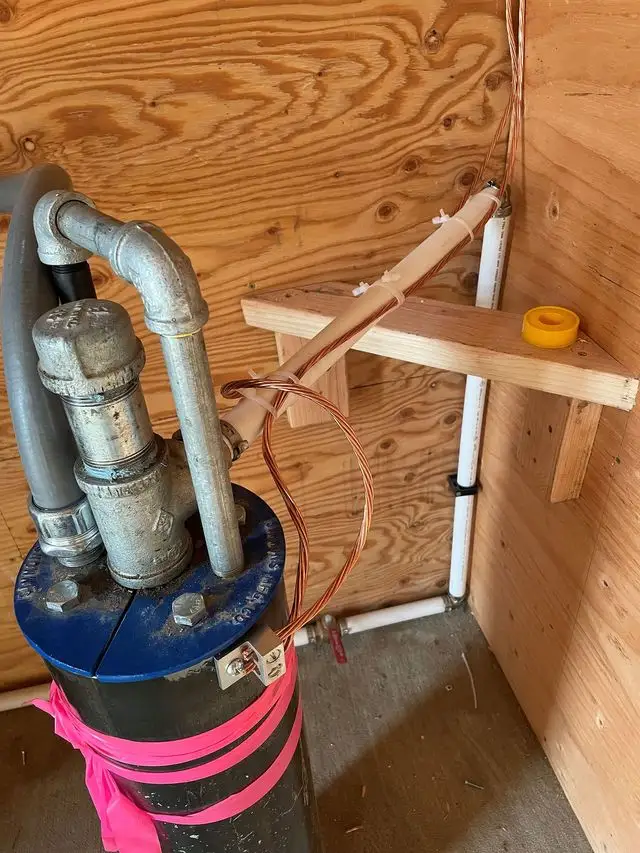
You are standing in the kitchen with nothing running, and you hear the pump click on, hum for a few seconds, and shut off. A minute later it does it again. That repeated starting and stopping is called short cycling, and it is one of the most common well complaints we hear from homeowners, farms, and landlords across the Yakima Valley. It is also one of the more expensive ones to ignore, because starting is the hardest thing a pump motor does.
What short cycling actually means
A healthy well pump runs in long, steady stretches. Water fills the pressure tank, the pressure switch senses that the cut-out pressure has been reached and opens the circuit, and the pump rests until you use enough water to pull the pressure back down to the cut-in setting. In a quiet house it may start only a few times all day.
Short cycling is the opposite pattern. The pump starts, runs for a few seconds, stops, and starts again, sometimes every ten or twenty seconds. The pump itself is rarely the first thing to blame. Usually something upstream is telling it to start far more often than it should. That is the good news: the fix is often smaller than a new pump, but only if the real cause is found first.
The four usual suspects
When we track down short cycling on a service call, we work through four possibilities, roughly in this order.
- A waterlogged or failed pressure tank. The tank holds a cushion of air behind a rubber bladder or diaphragm. When that air charge is lost or the bladder splits, the tank fills with water, the cushion disappears, and pressure swings from cut-out to cut-in in seconds.
- A tired pressure switch. Contacts can pit and stick, the little tube feeding the switch can clog with sediment, or the settings can drift until the gap between cut-in and cut-out is too narrow to give the pump a real rest.
- A leak after the pump. A running toilet, a dripping hose bib, a cracked line out to a barn or shop, or a failing check valve all let pressure bleed off. Even a slow leak drops the pressure enough to call the pump on again and again.
- A pump or well problem. A worn pump, a bad check valve down the well, or a well that is drawing down so far that the pump starves can all produce the same click, hum, stop pattern.
Simple checks you can make from the pump house
The clues cost nothing and save time when the crew arrives. First, shut off every fixture in the house and watch the pressure gauge near the tank. If the needle keeps sliding down with nothing running, water is escaping somewhere, which points toward a leak or a leaking check valve. If the pressure holds steady and the pump stays quiet, the cycling only shows up when you use water, which points toward the tank.
Second, knock on the tank with your knuckles. A healthy tank sounds hollow near the top, where the air is, and dull near the bottom, where the water is. A waterlogged tank sounds dull all the way up. Third, note how long the pump runs and how long it rests. Those two numbers tell a technician a lot.
One safety note. The pressure switch carries line voltage. Leave the cover on and the power on or off as you found it, and let a licensed electrician open anything that is wired.
Why you should not wait it out
Every start draws a surge of current well above what the motor needs while it is running. Constant unnecessary starts cook the motor windings, burn the contacts in the switch, and wear the pump long before its time. A short cycling pump that was perfectly healthy in August can be a dead pump by Thanksgiving. If you hear the pattern, call, and do not let it run for weeks hoping it settles down. It will not.
What a proper repair looks like
A good repair starts with measuring, not guessing. The tech checks the tank charge with the pump off and the tank drained, compares it with the pressure switch settings, inspects the switch contacts and tube, and checks the pump draw and the check valve. If the tank is finished, it gets replaced and the switch set to match.
For some homes the better answer is a different control strategy. A SubDrive or VFD varies the motor speed to hold constant pressure instead of starting and stopping, which removes short cycling as a habit. SubDrive systems are designed specifically for constant pressure in well water systems, while VFDs give broader motor control for other applications. Castle Pump & Electric installs and services both, and works with Grundfos, Franklin, and Square D equipment.
There is a practical advantage to calling a company that does both pumps and power. Castle holds an electrical contractor license as well as pulling pumps, so a cycling pump that turns out to be a wiring or control fault is one visit, not two companies pointing at each other. Most pump repairs can be completed the same day, depending on the issue and parts availability, and the crew is available 24 hours a day at (509) 580-0470.
If your pump is cycling now, take a look at our pump components and controls page at /well-pump-services/pump-components-and-controls for pressure tanks, switches, and SubDrive systems, or our pump repair and maintenance page at /well-pump-services/pump-repair-and-maintenance to see how a service call works.
Castle Pump & Electric, (509) 580-0470
Call (509) 580-0470More articles
Signs Your Well Pressure Tank or Pressure Switch Is Failing
The tank and the switch are the two cheap parts that decide how hard your well pump has to work, so their warning signs are worth knowing.
Common Irrigation Pump Problems and When to Call for Repair
Irrigation pumps tend to fail at the worst moment, in the middle of the growing season, so knowing the warning signs is worth the time.