Common Irrigation Pump Problems and When to Call for Repair
Irrigation pumps tend to fail at the worst moment, in the middle of the growing season, so knowing the warning signs is worth the time.
October 7, 2026 · 4 min read
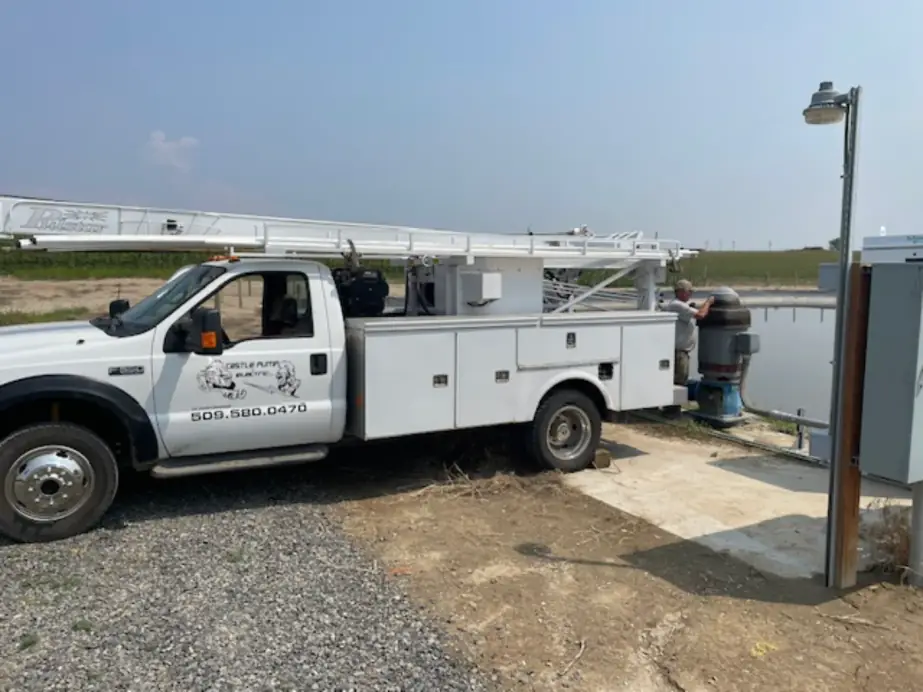
Across the Yakima Valley, irrigation pumps do hard, seasonal work. They sit idle for months, then run for long hours when the crop or pasture needs water most. That pattern is rough on equipment. A pump that behaved last August may not start in April, or may start and deliver half the water it used to. Here are the problems we see most often on agricultural and irrigation pumps, what you can safely look at yourself, and when it is time to call.
Low flow or low pressure
The most common complaint is simple: the pump runs, but the water does not reach where it used to. Several things cause that. A worn impeller moves less water than it should. A clogged intake screen or suction line starves the pump. A leak on the discharge side wastes water before it gets to the field. Or the water level in the well may have dropped and the pump is drawing down further than usual. A flow test, which measures what the pump actually delivers, is the honest way to sort these out, because eyeballing a sprinkler does not tell you which one you have.
Lost prime and air in the line
Some pumps need to be full of water to move water. If the system loses its prime, the pump spins and delivers nothing, or it delivers water in spits and bursts. Common causes are a leaking suction fitting, a failing foot valve or check valve, or a water level that has fallen below the intake. Running a pump dry is hard on seals and can cause damage quickly, so if the pump is spinning without moving water, shut it off rather than waiting to see what happens.
Cavitation, vibration, and noise
A pump that sounds like it is pumping gravel is often cavitating, which means vapor bubbles are forming and collapsing inside the pump because it cannot get enough water at the intake. Cavitation pits impellers and shortens the life of the whole pump. Grinding, squealing, or rhythmic thumping usually points to worn bearings, a misaligned shaft, or a loose mount. On a turbine pump, vibration can also mean wear down the column. Noise is a symptom with a short window: addressed early, it is often a bearing or seal. Ignored, it becomes a motor.
Motors that trip, overheat, or will not start
A motor that trips its breaker or overload, or runs hot to the touch, is telling you it is working too hard or being fed badly. The causes include a worn pump that loads the motor, low or unbalanced voltage, loose or corroded connections, a failing contactor, or a control problem. On pumps running variable frequency drives, a drive fault can look like a pump failure. This is where it helps to have a crew that carries an electrical contractor license as well as pump experience. Castle Pump & Electric treats the pump, the motor, and the wiring as one system, because from the field they are.
Leaks at seals and fittings
A drip at a pump seal or packing is common and often tolerable in small amounts, but a growing leak or a spray is not. Leaks at fittings and unions can also let air into the suction side, which brings back the prime and cavitation problems above. A small leak that is repaired in the off-season costs far less than one that fails on a hot July weekend.
What you can safely check yourself
- Look and listen. Note any change in sound, vibration, or heat compared with last season.
- Check the intake screen and any visible suction line for debris, kinks, or air leaks.
- Watch the pressure gauge at the pump and compare it with what you remember from last season.
- Look for wet spots, rust streaks, and drips around seals, unions, and the base.
- Check that the breaker has not tripped, but do not reset it more than once. A breaker that trips twice is a warning, not an annoyance.
Do not open starters, drives, or control panels. They carry line voltage and belong to a licensed electrician.
When to call for repair
Call as soon as you see low flow that does not clear up after the simple checks, any grinding or squealing, a motor that trips or runs hot, a pump that loses prime repeatedly, or any sign of water or rust where it should not be. Do not wait for the middle of the season. Many of these problems are easier, and cheaper, to handle in early spring before demand is high, and the crew can fit a flow test and a look at the controls into a single visit.
Preventing the next failure
A preventative maintenance program is the quiet fix behind most reliable irrigation systems. Regular flow tests catch a worn pump before it fails, and an inspection of seals, bearings, and electrical connections catches the smaller faults that become big ones. Castle Pump & Electric offers flow tests and maintenance programs for well pumps, turbine pumps, agricultural well pumps, and irrigation pumps, and most pump repairs can be completed the same day, depending on the issue and parts availability.
For repair and maintenance details, see /well-pump-services/pump-repair-and-maintenance. If your pump is down right now, call (509) 580-0470. The crew is available 24 hours a day, 7 days a week, since crops and livestock do not wait for business hours.
Castle Pump & Electric, (509) 580-0470
Call (509) 580-0470More articles
Why Does My Well Pump Keep Turning On and Off?
A pump that clicks on and off every few seconds is telling you something upstream is wrong, and it is usually cheaper to fix before the motor pays for it.
Signs Your Well Pressure Tank or Pressure Switch Is Failing
The tank and the switch are the two cheap parts that decide how hard your well pump has to work, so their warning signs are worth knowing.